Recipe of Speedy Authentic Easy Kimchi (shellfish-free)
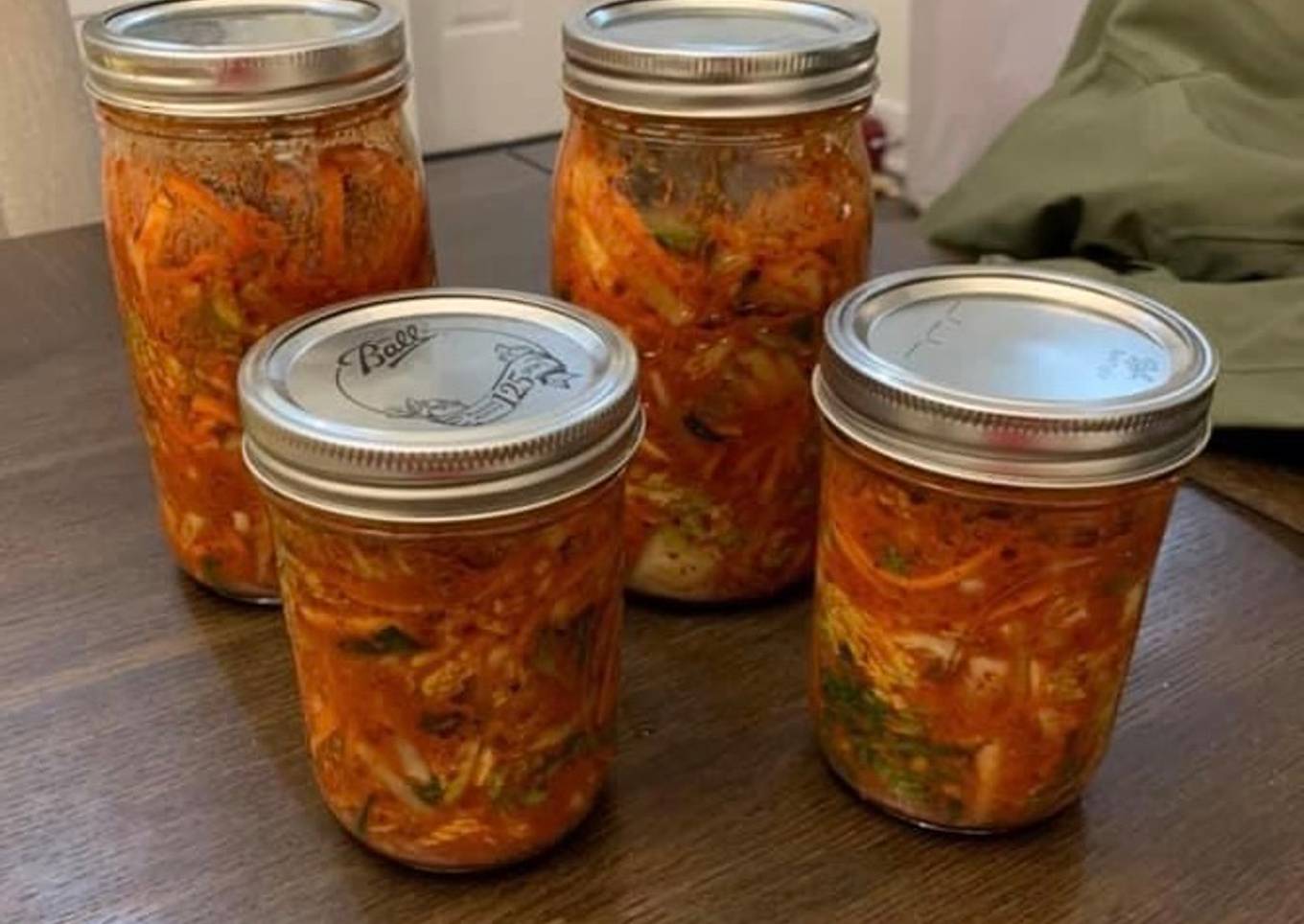
Hey everyone, hope you are having an incredible day today. Today, I'm gonna show you how to make a special dish, Recipe of Favorite Authentic Easy Kimchi (shellfish-free). It is one of my favorites. This time, I will make it a little bit unique. This will be really delicious.
Let us face it, cooking is not just a top priority in the lifestyles of every person, woman, or child on Earth. In reality, far too people have forced understanding how to cook important within their own lives. Which usually means that we often exist on power foods and boxed mixes rather than taking your time and effort to prepare healthy meals to our families and our own personal enjoyment.
Which means at any particular time in your cooking cycle cycles there is quite probably someone somewhere that is worse or better in cooking more compared to you personally. Take heart from this because even the very best have bad days in terms of cooking. There are a lot of people who cook for several factors. Some cook in order to eat and live while others cook simply because they actually like the process of cooking. Some cook through the times of emotional trauma among others cook out of sheer boredom. Whatever your reason behind cooking or learning to cook you need to always begin with the basics.
The first thing which you want to master is what the different terminology you will find in recipes actually means. There are lots of brand new and sometimes foreign sounding terms you may see in recipes that are common. These terms can mean that the difference in recipe failure or success. You should find a way to find a fantastic section in virtually any inclusive cookbook that explains the different definitions for unfamiliar speech. If you're not absolutely sure what is meant by"folding into the eggs" it really is in your interests to check it up.
Many things affect the quality of taste from Authentic Easy Kimchi (shellfish-free), starting from the type of ingredients, then the selection of fresh ingredients, the ability to cut dishes to how to make and serve them. Don't worry if you want to prepare Authentic Easy Kimchi (shellfish-free) delicious at home, because if you already know the trick then this dish can be used as an extraordinary special treat.
As for the number of servings that can be served to make Authentic Easy Kimchi (shellfish-free) is Yields 2-32oz and 2-16 oz jars. So make sure this portion is enough to serve for yourself and your beloved family.
Just in addition, the time it takes to cook Authentic Easy Kimchi (shellfish-free) estimated approx Approximately 3 hours.
To get started with this recipe, we have to first prepare a few components. You can cook Authentic Easy Kimchi (shellfish-free) using 26 ingredients and 15 steps. Here is how you cook it.
I developed this recipe because of my shellfish allergy. It features subs for the fermented shrimp, and I've found that the flavor tastes very similar to what I ate when I was in South Korea. I will add more pictures when I make it again.
Ingredients and spices that need to be Get to make Authentic Easy Kimchi (shellfish-free):
- 1 Large Napa Cabbage
- 1/2 daikon radish
- 1 cup Korean Salt (pickling salt should be fine)
- 1/2-1 bag carrot matchsticks
- 4 green onions or scallions
- Seasonings
- 3/4 cup water
- 1.5 tablespoons glutinous rice flour
- 1/2 cup hot water
- 1/2-1 teaspoon dashi stock (I use the granules)
- 1/4 cup white (shiro) miso
- 1 tablespoon gochujang (Korean chili paste)
- 3 tablespoons anchovy sauce (I use premium Chung-jung-one brand)
- 1/2 cup gochugaru, Korean Chili Flakes (you can add more if you like it spicier)
- 3 tablespoons minced garlic
- 1 teaspoon grated ginger
- Kitchen Tools
- 1 small bowl
- 1 medium bowl
- 1 large bowl
- 1 large strainer
- 1 large glass measuring cup (for the porridge)
- rubber kitchen gloves to mix everything together
- 1 dark-colored apron and dark-colored clothing with short sleeves
- 2-32 oz and 2-16 oz mason jars, or airtight container you are willing to have smell like kimchi :)
- Canning funnel (optional, but very helpful)
Instructions to make Authentic Easy Kimchi (shellfish-free)
- Start by cutting up the Napa cabbage, without washing it. Cut off the bottom and then cut it into fourths (you can make a cut about halfway up from the bottom and then pull it apart the rest of the way). Once in fourths, cut each fourth in half again and then cut each cabbage section into approximately one inch pieces. If there are any that are more than 1 or 1.5 inch, just break it in half with your hands.
- Put all the cut up cabbage into a large strainer and wash it really well. I place the strainer in the sink and use my hands to make sure all the cabbage is washed. You can also fill the sink around the strainer, and then wash the cabbage well, then empty the sink (it doesn't have to be too perfect, as we will be rinsing the cabbage off really well later on).
- Move the cabbage to your large bowl. Move the cabbage around and try to sprinkle the salt evenly (rather than just dumping it all on top of the pile of cabbage). Sprinkle half on, mix it through, and then sprinkle the rest, doing the same.
- Let this rest at room temp and covered with plastic rap or a large plate for about two hours, stopping by about half way through to give it a mix. You'll note that a brine is forming, water is collecting in the bowl, and the cabbage is growing soft. This is good. Meanwhile we will prep the other stuff.
- While the cabbage is sitting, first peel and cut up the daikon radish into matchsticks. Don't strive for perfection, just edible pieces. Put them in the medium bowl. To the same bowl, add the half bag of carrot matchsticks and the green onions/scallions, cut into about one inch pieces.
- We will also prepare the seasoning now. Put the 3/4 cup of water in a small sauce pan and heat it up on the stove. Once it's reached a gentle boil, slowly add the 1.5 tablespoons of glutinous rice flour and whisk as you add it. It's important to go slowly, as it will clump if added all at once. While some clumps are ok, we are looking for a mostly smooth porridge/paste. Remove from heat and let sit for now.
- Now time for the shellfish substitution flavors. In your large glass measuring cup (I've found these work best for this part because of the shape and ease of pouring later), add your 1/2 cup of hot (near boiling) water and to it dissolve about 1 teaspoon of dashi stock. Then mix in 1/4 cup of shiro (white) miso and 1 tablespoon of gochujang. Whisk this until dissolved. Next, add the rice porridge. Stir all of this well and put in the fridge for later on.
- Now just mince the ginger and garlic and keep in a small bowl for later.
- The cabbage is ready when you can bend the thickest pieces and they don't break right away. Put your strainer back in the sink and empty the cabbage into it, and rinse out the large bowl as we will be using that again! Rinse the cabbage (like we did at the beginning) about three or four times, as we do not want any of the salt remaining. Once rinsed, put the cabbage in the large bowl.
- Before we continue, get the jars or containers ready. Mason jars are the best for this, as the glass does not retain the kimchi smell and can be reused for other things. You can also buy a kimchi container if you make it frequently. I like to put down a plastic mat before filling the jars to protect the countertop, as the sauce will stain.
- Take out the porridge mixture and give it another stir. Then add to it the 3 tablespoons of anchovy sauce, the garlic and ginger, and then 1/2 cup of gochugaru (Korean chili flakes) and combine all of these to it. The consistency should be a runny paste.
- Time to put on the gloves, as your hands make the best mixing tools here. Once you are gloved, add the sauce to the cut up veggies in the medium bowl and mix thoroughly. Once that's done, add that mixture to the cabbage and combine thoroughly with the cabbage. It should look delicious!

- At this point, I like to use a canning funnel (they're plastic, cheap, and make the process way easier). Using your hands, grab clumps of the kimchi and stuff into the jars, pressing down with your fist as you go and ensuring the brine is covering the contents. Do this and make sure to leave about two inches of head space on the top of each jar (otherwise they will explode and it's no fun). Wait until you put the lids on.
- Wash your hands, with gloves on, with dish soap and try to get as much of the kimchi liquid off of them before placing them on a dish drainer to dry. Now rinse out the bowls and everything so that there's no sauce splashing around during cleanup.
- Use a damp paper towel to wipe off the rims of the jars before putting on the lids. Once the lids are secured, I rinse the jars off under warm water and dry them off. Place them in the fridge to ferment or enjoy right away! This kimchi is good for weeks, depending on how sour you like it!
While that is certainly not the end all be all guide to cooking fast and simple lunches it is great food for thought. The hope is that will get your own creative juices flowing so that you may prepare wonderful lunches for your family without having to perform too horribly much heavy cooking at the practice.
So that is going to wrap this up for this special food Recipe of Quick Authentic Easy Kimchi (shellfish-free). Thank you very much for your time. I am sure that you can make this at home. There's gonna be interesting food at home recipes coming up. Don't forget to save this page in your browser, and share it to your family, friends and colleague. Thanks again for reading. Go on get cooking!